
Near Shore Fishing Report
Near shore fishing off Johns Pass and Madeira Beach is in a warm water transition, and the biggest story is that lane snapper action is going well while the hogfish bite continues to soften. As the water temperature climbs, hogfish become more spread out and less concentrated, making them harder to target consistently. At the same time, lane snapper, mangrove snapper, and red grouper become more important parts of the near shore mixed bag. This is a normal seasonal shift, and it creates some really fun fishing if you adjust your expectations and tackle.
Lane snapper have been one of the better near shore targets lately. We are seeing them in good numbers, especially in that deeper near shore range around hard bottom, ledges, shell bottom, and mixed structure. Lane snapper are aggressive, colorful, great eating, and a perfect target for our near shore trips as the water warms. Squid, shrimp, and small chunks of threadfin are all excellent baits. Squid is durable and keeps you fishing through smaller pickers, shrimp often gets better quality bites, and fresh cut threadfin can be excellent when the fish are feeding aggressively.
When targeting lane snapper, keep the bait close on the bottom and be ready for a quick bite. If you are getting pecked but not hooking fish, downsize the bait and hook. If the bite is wide open, you can use slightly larger bait pieces to target better fish.
Mangrove snapper are also showing near shore, though the better action has been in deeper near shore water and beyond. Near shore mangroves can be tricky because they are smart, structure-oriented, and often leader shy. Small chunks of threadfin are a top bait, and a light double-snell rig with smaller hooks around 3/0 can be very effective. The key is a natural presentation. If the bait spins, drags, or looks unnatural, the better mangroves will often pass it up.
Use the lightest leader you can get away with while still having enough strength to pull fish away from structure. Around cleaner water and lighter current, you may need to downsize leader and bait. If the water is dirty or the fish are aggressive, you can get away with heavier tackle.
Red grouper are possible near shore, especially when fishing deeper hard bottom and ledges. We are seeing some red grouper action in those deeper near shore zones, though offshore and deeper water have been more consistent overall. Whole squid, larger cut baits, live pinfish, and big chunks of threadfin are all good options. If you want to target a better red grouper, use a bait large enough to discourage some of the smaller pickers. Red grouper love potholes, cracks, low ledges, and broken hard bottom, so do not only focus on the tallest structure. Sometimes subtle bottom is best.
Hogfish are still around, but the bite has definitely softened. Hot water has spread them out and made them less concentrated. That means they are more of a bonus target now than a sure thing. If you want to target hogfish, live shrimp remains the best bait. Fish lighter tackle, long fluorocarbon leaders, smaller hooks, and low-profile hard bottom in 40 to 70 feet of water. A 4000 to 5000 size spinning reel, 20 to 30 pound braid, 10 to 15 feet of 30 pound fluorocarbon, a 3/0 to 4/0 hook, and 1 to 2 ounces of weight is a good starting point. Be patient, but stay mobile.
Mackerel are still possible near shore, but most of the pelagic action has been happening deeper lately. We are still seeing a few Spanish mackerel around bait schools, wrecks, reefs, and faster moving water, but they are not as consistent near shore as the snapper bite. Spoons, small trolling plugs, jigs, and free-lined baits are all good choices when you find them. Keep an eye out for birds and bait showers. If you are running between bottom spots, trolling a small spoon or plug can help you locate active fish.
Overall, near shore fishing is still producing a nice mixed bag. The hogfish bite is slowing, but lane snapper are stepping up in a big way, mangrove snapper are around in deeper water, red grouper are possible, and there are still chances at mackerel and kingfish. The key is adapting to warm water. Fish deeper, fish cleaner presentations, use fresh bait, and stay flexible.
Offshore Fishing Report
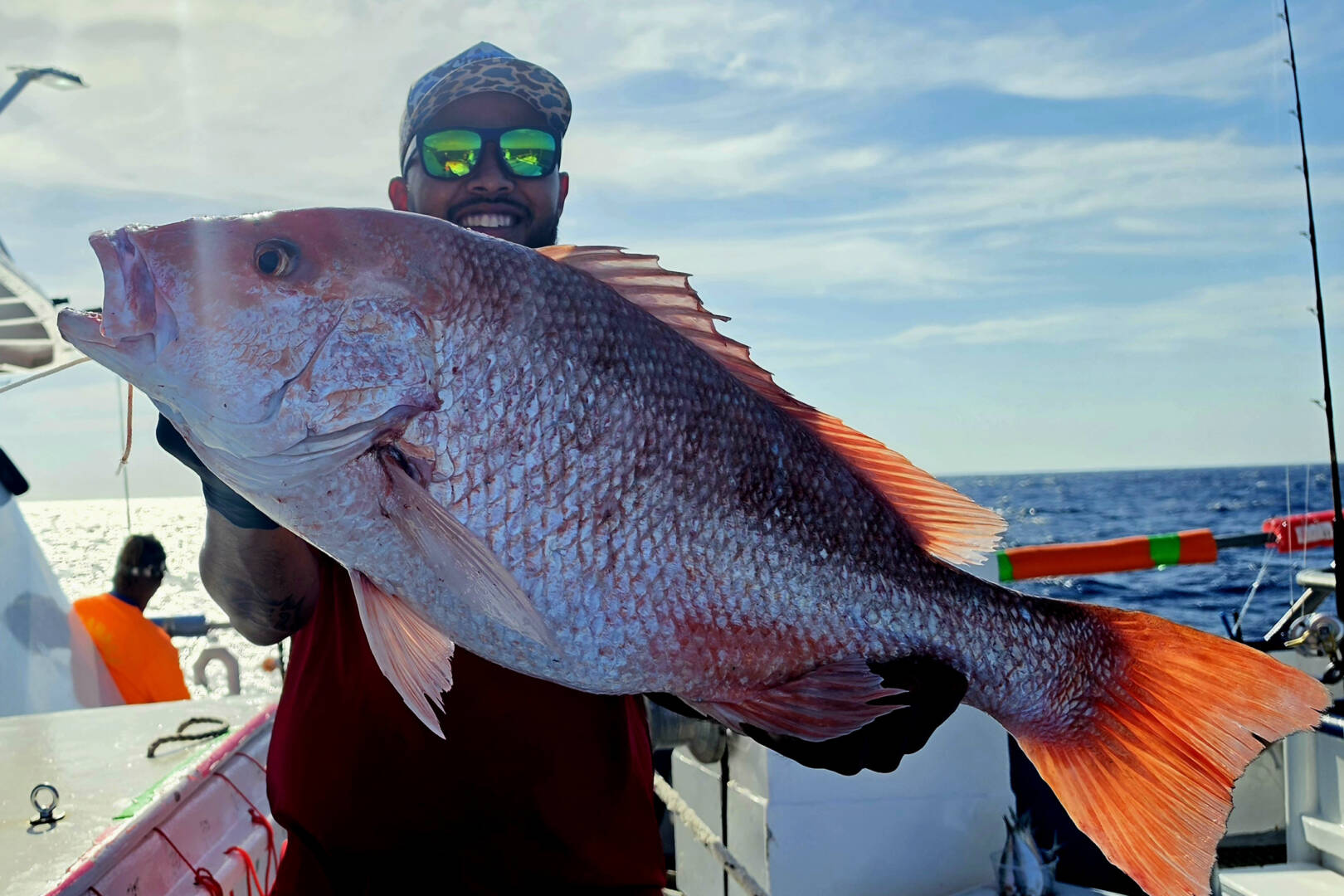
Offshore fishing is the big headline right now, and red snapper season is in full swing. That has our main focus on the longer range trips, and the fishing has been going very well. We are catching some big red snapper lately on our 12 hour extreme, 39 hour, and 44 hour trips. Those deeper water trips give us the range and time needed to target better concentrations of fish, especially as the season progresses and fishing pressure increases closer to shore.
Red snapper have been biting best for us in about 160 feet of water or deeper. We are catching some big dogs out there in that deeper water, and the key is using big baits for big fish. These larger red snapper are powerful, aggressive, and not afraid to eat a substantial meal. A 60 pound leader is generally a minimum, and many anglers targeting the larger fish are using 80 to 100 pound leader. Big hooks in the 8/0 to 10/0 range are common when fishing large baits. Large strips of bonita, whole squid, select dead baits, oily smelly baits, and larger live baits are all strong options.
The longer range trips shine for red snapper because they allow us to fish deeper structure, spread out from pressure, and spend time in areas holding better fish. The 12 hour extreme trips are a great option for anglers wanting a strong shot at quality red snapper in a single-day format, while the 39 hour and 44 hour trips give us even more time to fish multiple bite windows, night periods, and deeper areas. When the red snapper bite is on, it is one of the most exciting offshore fisheries we have.
Red grouper are also biting well, especially a little shallower than the best red snapper zone. We are seeing red grouper pretty good from about 100 to 160 feet of water. Red grouper love hard bottom, potholes, low ledges, cracks, and swiss cheese bottom. They are often not on the tallest structure. In fact, some of the best red grouper areas are subtle pieces with good bottom life and bait. Whole squid, octopus, bonita strips, large cut bait, threadfin chunks, and live pinfish are all productive.
If you are targeting red grouper, do not be afraid to fish big baits and move around. Sometimes one stretch of bottom produces mostly short fish, while a nearby stretch with slightly different bottom produces keepers. Red grouper fishing rewards anglers who cover ground, pay attention to the bottom machine, and stay patient. The bite can come in waves, especially when the current changes or bait starts moving.
Mangrove snapper are being caught throughout the offshore area, but they have been doing a little better in the shallower stuff, especially when we focus on them at night. On our long-range trips, a productive strategy has been focusing on mangroves during the nighttime periods in shallower zones and then bouncing deeper during the day to focus on red snapper. Mangrove snapper are smart, wary, and very presentation-sensitive. Cut threadfin on a double-snell rig remains one of the best setups for numbers.
For bigger mangroves, small live pinfish can be excellent. They often help get past smaller fish and tempt the larger mangroves into committing. Leader size matters. If the fish are chewing
aggressively, you can get away with heavier leader. If the bite is slow or the water is clear, lighten up and use smaller bait pieces. The goal is to make the bait drift naturally in the current. Mangroves can be very tide dependent, so pay attention to when they start biting and be ready to capitalize quickly.
Yellowtail snapper action has been good in the deeper water too. They often prefer smaller bait and lighter tackle. Small strips of squid, little chunks of threadfin, and a controlled chum line can get them going. Around lighter quarter moon current, presentation becomes even more important. If the fish are there but picky, downsize tackle and let the bait move naturally.
We are also seeing a few mutton snapper, which are always a great bonus. Muttons often come on lively baits fished naturally on the bottom around good structure, sand edges, ledges, and areas with bait movement. They are not always a numbers fish for us, but they are a prized catch and add excitement to the box.
We have plenty of heads and tails species in the mix offshore as well, including vermillion snapper, porgies, almacos, and other hard-fighting, great-eating species. These fish keep rods bent and help round out the catch. Vermillion snapper often respond well to squid, small threadfin chunks, and chicken rigs in deeper water. Porgies will eat a variety of cut baits. Almaco jacks often show up around higher relief structure and can be caught on bait or jigs. These species are a big part of what makes our offshore trips so enjoyable because there is always something biting.
Pelagic action has been pretty consistent for us offshore. We are seeing a few nice blackfin tuna, a couple of wahoo, and there is always an opportunity for kingfish. This is also the time of year when we start to see chicken dolphin, or smaller mahi, show up as well. That means keeping eyes peeled, pitch rods ready, and doing some trolling between spots is always a great idea. Offshore fishing is not just about dropping to the bottom. The water column is alive right now, and the prepared angler is often the one who gets rewarded.
Blackfin tuna can pop up quickly around bait, birds, current edges, and while trolling between spots. Small feathers, trolling plugs, cedar plugs, jigs, and live baits can all work. Wahoo are always a possibility around the right water, especially near temperature breaks, color changes, and bait concentrations. Kingfish can show around structure and bait schools. Chicken dolphin may show up around floating debris, weed lines, current edges, or just randomly while running offshore. Having a pitch rod rigged and ready with a small jig, bucktail, or bait can make the difference between watching them swim by and putting fish in the box.
Overall, offshore fishing is in an excellent summer groove. Red snapper are the main event on the long-range trips, red grouper are strong in that 100 to 160 foot range, mangroves are steady with some better nighttime action, yellowtail and muttons are adding quality, and the pelagics are keeping things exciting between stops. This is a great time to get offshore with us out of Johns Pass and enjoy the variety that makes our central west Florida deep sea fishing so special.
Looking to sharpen your fishing skills? Be sure to visit our Fishing Tips & Tricks page, where you’ll find a growing collection of videos covering everything from rigging and bait selection to species-specific fishing techniques. Whether you’re targeting snapper, grouper, kingfish, or pelagic species, these videos are packed with helpful information to help you catch more fish: https://www.hubbardsmarina.com/fishing-tips/
For the latest fishing reports, photos, videos, and behind-the-scenes content, follow Hubbard’s Marina on Facebook, Instagram, YouTube, TikTok, X, Pinterest, and Snapchat. Just search @HubbardsMarina to stay connected with everything happening on the water.
Thank you for reading and following along with our fishing reports. We appreciate your support and look forward to seeing you aboard soon. And remember our family motto:
“If you’re too busy to go fishing, you’re just too busy!”
Tight lines,
Capt. Dylan Hubbard
Hubbard’s Marina
Call or Text: (727) 393-1947
https://www.HubbardsMarina.com
To read the full report, click here