
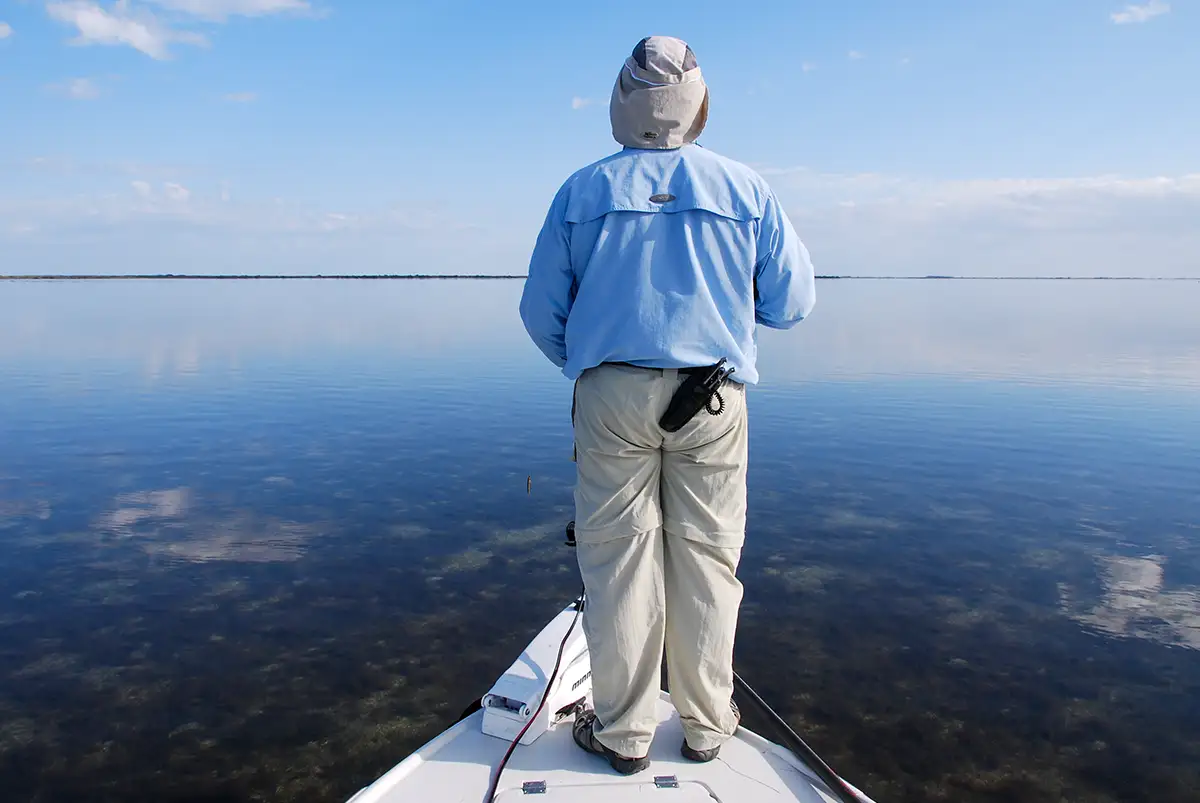
Why Inshore and Flats Fishing Avoids Seasickness
Seasickness is almost always caused by continuous motion from offshore swells and long exposure to open water with no land in sight. Inshore, backcountry, and flats fishing avoid these problems by keeping anglers in protected environments where wave action is minimal. Shallow grass flats, mangrove shorelines, lagoons, and backcountry waters are shielded by land and barrier islands keeping large waves away. With little rocking or rolling, anglers can stand, cast, and move around comfortably, focusing on fishing instead of their stomach. If you are prone to getting seasick yet still want to experience hard pulling saltwater fish try some of these inshore options.
Shorter Boat Rides and a More Comfortable Day
Inshore saltwater fishing also means much shorter boat rides. Rather than long offshore runs that can take hours, most inshore fishing spots are only minutes from the dock. This reduces fatigue and keeps the day relaxed from start to finish. There is also no need to troll for hours with loud engines and diesel fumes. Inshore trips are quieter, cleaner, and more personal, making them ideal for anglers who want comfort without giving up quality fishing. Smaller boats using less fuel can mean significantly less expense as well.
East Coast Lagoon Systems Near Orlando and Disney
Florida’s east coast is famous for its extensive lagoon systems, especially the Mosquito Lagoon and Indian River Lagoon. These lagoon systems are only about one hour from Orlando and the Disney area, making them an easy option for visitors looking to book inshore fishing charters near Orlando and Disney without dealing with offshore conditions Despite their convenience, these lagoons offer exceptional fishing opportunities in calm, shallow water.
The Mosquito Lagoon and Indian River Lagoon are known for clear water, healthy grass flats, and abundant baitfish. Much of the Mosquito Lagoon, in particular, is inside the Merritt Island national Wildlife Refuge and free from houses, hotels, or condos. These conditions support strong populations of redfish, spotted seatrout, black drum, snook, and seasonal tarpon. Many of these fish grow large, and anglers often target them in water shallow enough to see fish moving, tailing, or pushing wakes. Sight fishing is common, adding excitement while allowing anglers to fish precisely and efficiently in a stable, seasick-free environment.
West Coast Bays and Southwest Florida Backcountry
Florida’s west coast provides an equally impressive selection of inshore fishing options. Large bay systems such as Tampa Bay, Sarasota Bay, Charlotte Harbor, and Pine Island Sound offer miles of protected water that stay calm even when the Gulf of America is rough. These bays are well known for producing trophy redfish, snook, spotted seatrout, tarpon, and cobia, all within sheltered waters.
Farther south, the Ten Thousand Islands region of southwest Florida is one of the most unique inshore fisheries in the state. This vast network of mangrove islands, shallow bays, and winding backcountry channels creates some of the calmest saltwater fishing conditions available. Wind and waves are broken up by land in every direction, allowing anglers to fish comfortably even when offshore trips are canceled due to big waves. The Ten Thousand Islands are famous for snook, redfish, tarpon, and other powerful species, proving that remote, protected waters can still produce big fish.
Multiple Fishing Styles for Any Angler
Inshore and flats fishing offer a wide range of fishing styles, making these trips appealing to anglers of all experience levels. Live bait fishing is straightforward and effective, perfect for beginners, families, or anyone who wants steady action. Artificial lure fishing adds more involvement, with anglers actively casting and retrieving along shorelines, flats, and structure.
For those looking for a challenge, technical sight fishing is a major draw. Casting to visible fish in shallow water requires accuracy, timing, and patience. Saltwater fly fishing charters take this one step further, offering a quiet, visual, and highly engaging way to target saltwater species. Whether using live bait, lures, or a fly rod, inshore waters provide options that offshore fishing simply cannot match.
Fishing Options When Offshore Trips Are Canceled
One of the biggest advantages of inshore fishing is reliability. Offshore trips are frequently canceled due to high winds and large seas, especially during winter months and seasonal weather changes. Inshore waters are protected and often remain fishable on those same days. This means anglers still have consistent opportunities to get on the water, enjoy a smooth ride, and catch quality saltwater fish even when offshore conditions are unsafe.
Florida’s inshore flats, lagoons, bays, and backcountry waters offer a clear solution for anglers who want saltwater fishing without seasickness. Calm conditions, short boat rides, multiple fishing styles, and dependable access make inshore fishing one of the most enjoyable and productive ways to fish in Florida.
Capt. Chris Myers has over 20 years experience guiding the inshore saltwater lagoons of east central Florida. Call or text 321-229-2848