
Winter Conditions & Fish Behavior in Tampa Bay
Winter in Tampa Bay doesn’t shut fishing down — it reorganizes it. As Gulf breezes cool surface waters into the 60s and below, fish begin to concentrate near warmer water pockets or key habitat that holds food and shelter. Coastal rivers, creeks, docks, oyster bars, mangrove shorelines, and deeper channels become hotspots.
I like to start days looking at the forecast, checking tides, and planning routes so the boat is in the right water as the sun warms the bay. On truly cold mornings, the bite can be slow early — but by mid-morning to early afternoon, fish become noticeably more active as water warms in the shallows.
Sheepshead — Winter Structure Specialists
Sheepshead love structure in winter. They gather in high numbers around:
- Bridge pilings
- Rock piles and oyster bars
- Residential seawalls
- Docks and mangrove roots
- Artificial reefs
These fish are in pre-spawn mode through winter and will feed aggressively on crustaceans and barnacles.
Tactics That Work
Bait:
- Fiddler crabs — the top choice if you can collect them. Smaller fiddlers produce consistent bite rates.
- Live shrimp — universally productive and easy to use.
- Tiny pieces of clam, oyster, or mussel — great when sheepshead are finicky.
Presentation & Rigging:
- Light spinning tackle with sensitive tips helps detect subtle takes.
- Small hooks (sizes 1–1/0) paired with light split shot or a small egg sinker keeps bait snug against structure.
- Freeline bait up to the structure or gently bump the bottom — sheepshead will often suck bait off the bottom with little indication.
Tide & Current:
- Outgoing tides with good current movement trigger intense feeding as crabs and barnacles become more active along structure.
- Areas with slight current and warmth from tidal exchange will stack fish for good action.
Sheepshead in winter aren’t nomadic. They set up tight to structure and feed predictably. For anglers looking to put fillets in the cooler, catch rates are often best of the season during December through February.
Speckled Trout — Cool Water Opportunists
Winter Patterns
Speckled trout remain active throughout winter and often concentrate on grass flats, deep potholes, and grass edges near channels. They feed consistently on baitfish that cluster in these zones, especially on warming days.
Best Techniques
Live Bait:
- Live shrimp under a popping cork offers sound and presentation that triggers strikes even when trout are less aggressive.
Artificial Lures:
- Small soft plastics — paddle tails or shrimp imitations — rigged on light jig heads fished slowly near grass edges can be deadly.
- When trout suspend deeper, jerking twitch baits or suspending lures with slow retrieves can ignite bites.
Time of Day & Warmth:
- Mid-day periods, when the sun warms shallow water, often yield the best bites. Fish will push up onto shallower flats and edges to feed aggressively.
- Positioning:
- Channels and deeper edges where baitfish stack are key spots. A slow drift or long casts into seams where grass meets deeper water increases hook-up chances.
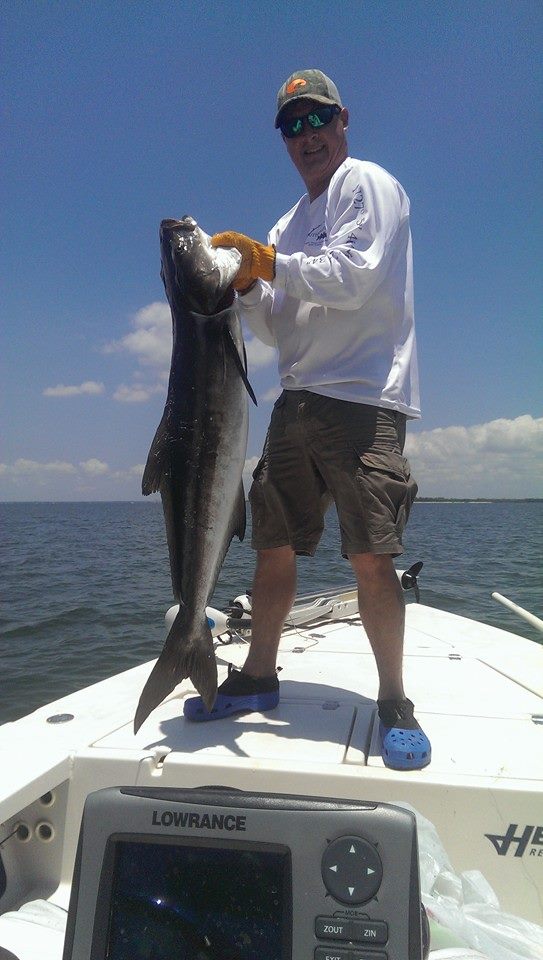
Cobia — Winter Visitors & Structure Roamers
Unlike sheepshead and trout, cobia winter patterns are less predictable but highly rewarding. Winter days with stable temperatures and calm winds often bring cobia into the bay around deeper structure and near markers — sometimes unexpectedly.
Where to Look
- Around channel markers
- Near deeper structure or reefs
- Trailing large rays or sharks in shallow water (near the power plants)
Tactics for Winter Cobia
Sight Fishing:
When conditions provide clarity and calm water, Cobia can be sighted cruising in shallow flats — often near rays. Approach quietly and present baits ahead of their path.
Bait Choices:
- Live shrimp or pinfish
- Cut bait when the bite is on
- Chunk baits near deeper structure
Gear:
Cobia are strong fighters. If they’re holding deeper or offshore, step up to heavier spinning or conventional gear with 40–65+ lb class tackle.
Timing:
Cobia bites can flare up quickly around warmer midday water or tidal changes. Keep moving and stay sharp.
Captain’s Final Tips for Winter Success
- Study tides and water temps — fish often feed hardest on rising or falling tides when bait is moving and temperatures tick up.
- Be patient with subtle bites — winter fish can be in a groove and eat slowly; a gentle hook set is often better than a forceful one.
- Warm up the water when possible — fishing south or west facing shorelines mid-day often exposes warmer water and triggers bites others miss.
- Adapt your approach — if one technique isn’t producing, switch baits between live bait and soft plastics until you find what fish want.
Winter in Tampa Bay is some of the most dynamic and productive fishing of the year — and with Captain Charlie Howell guiding the boat, anglers are making the most of the season for sheepshead, speckled trout, and cobia alike.
Tight lines and good luck on the water!